教育科学 ›› 2026, Vol. 42 ›› Issue (4): 55-61.

• 乡村教育研究 • 上一篇    下一篇

乡土知识之于乡村教育:价值、原则及路径*——基于知识社会学的分析

黄欢   

  1. 南京师范大学 教育科学学院, 江苏 南京 210097
  • 出版日期:2026-07-15 发布日期:2026-09-29
  • 作者简介:黄欢(1994- ),女,贵州贵阳人,南京师范大学教育科学学院博士生,主要从事教育基本理论、乡村教育等研究。
  • 基金资助:
    *2022年教育部人文社会科学基金项目“乡村振兴背景下乡村小规模学校高质量发展的内生路径研究”(22YJCZH060)

Local Knowledge in Rural Education: Values, Principles and Pathways—An Analysis Based on the Sociology of Knowledge

Huang Huan   

  1. School of Education Science, Nanjing Normal University, Nanjing, Jiangsu 210097, China
  • Online:2026-07-15 Published:2026-09-29

摘要:

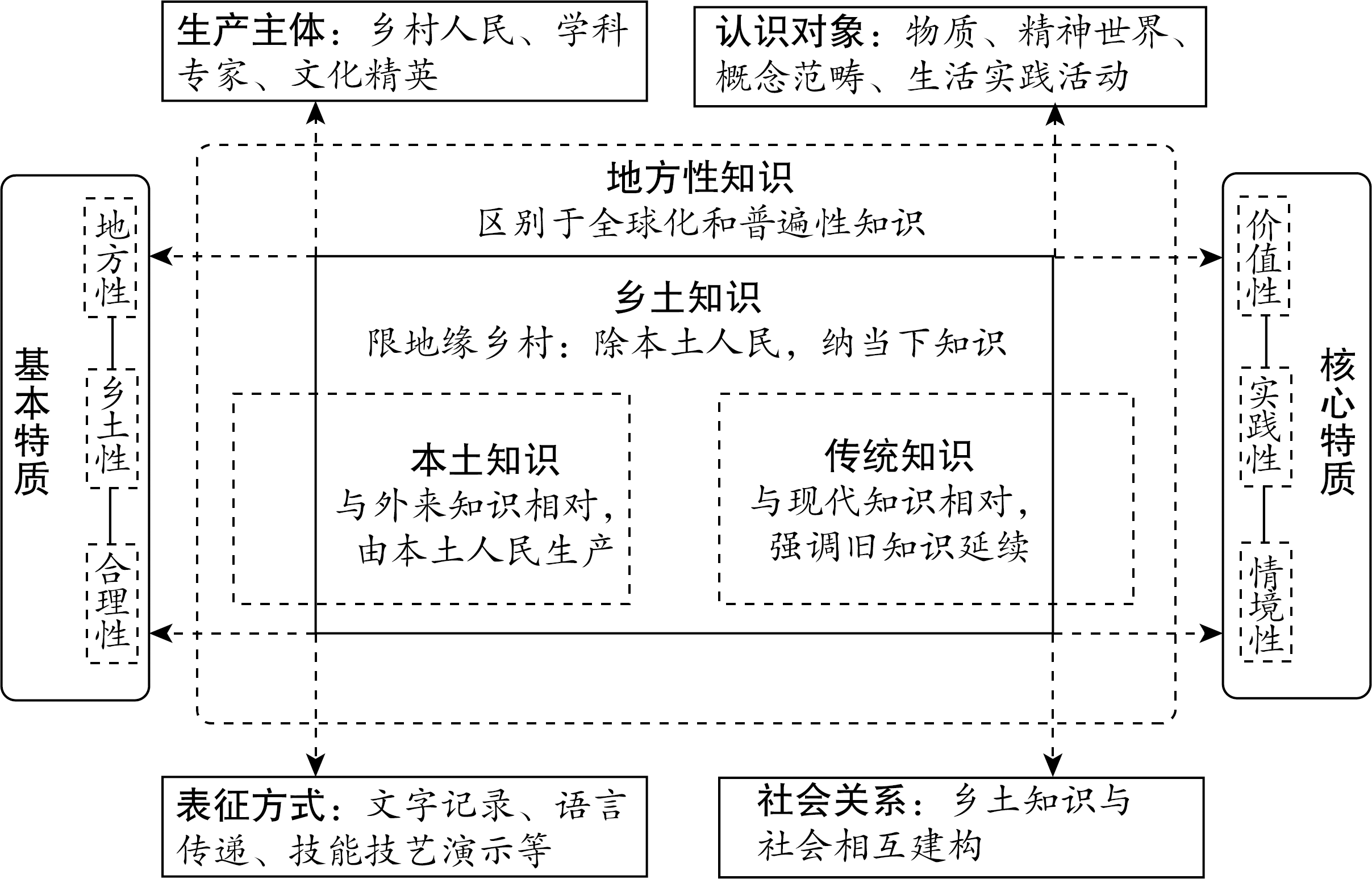
乡土知识是乡村居民及文化精英基于乡村自然环境、乡村人民日常生活和社会交往行动共同创造的认知体系,具有地方性、乡土性、合理性、价值性、实践性、情境性等特质。因其内含知识专断基础、价值负载性和政治历史基础,乡土知识具有成为教育知识的可能。在教育现代化背景下,乡土知识融入乡村教育体现出促进人的全面发展、推进高质量教育公平、传承和创新优秀乡土文化、服务美好社区建设等价值。在乡村教育中,融入乡土知识应围绕知识生产、再脉络化,以及再生产三个场域展开,遵循合价值性、合规律性、合主体性建构原则以明确其内容边界、情境边界与主体边界。乡土知识要扎根乡村教育实践,政府和学校需从依托三级课程体系、涵养教师乡土素养、创新师生评价机制三方面,做好乡土知识的内容承载、组织设计和有效传习工作。

关键词: 乡村教育, 知识社会学, 乡土知识, 教育现代化

Abstract:

Local knowledge is a cognitive system jointly created by rural residents and cultural elites based on the natural environment of rural areas, the daily lives of rural people, and their social interactions. It is characterized by locality, rurality, rationality, value-ladenness, practicality, and contextuality. Given its foundations in knowledge monopoly, value-ladenness, and political-historical conditions, local knowledge has the potential to become educational knowledge. In the context of educational modernization, integrating local knowledge into rural education reflects values such as promoting all-round human development, advancing high-quality educational equity, inheriting and innovating fine local culture, and serving the construction of better communities. In rural education, the integration of local knowledge should focus on the three domains of knowledge production, recontextualization, and reproduction, while following the principles of value appropriateness, lawfulness, and subjectivity construction to clarify its content, contextual, and subject boundaries. In rural education, the integration of local knowledge should focus on the three domains of knowledge production, recontextualization, and reproduction, while following the principles of value appropriateness, lawfulness, and subjectivity construction to clarify its content, contextual, and subject boundaries.

Key words: rural education, sociology of knowledge, local knowledge, educational modernization

中图分类号: